SUNYI Pocong — Entity Guide
Shrouded folklore made into a noise-sensitive threat inside Rumah Wirjodihardjo.
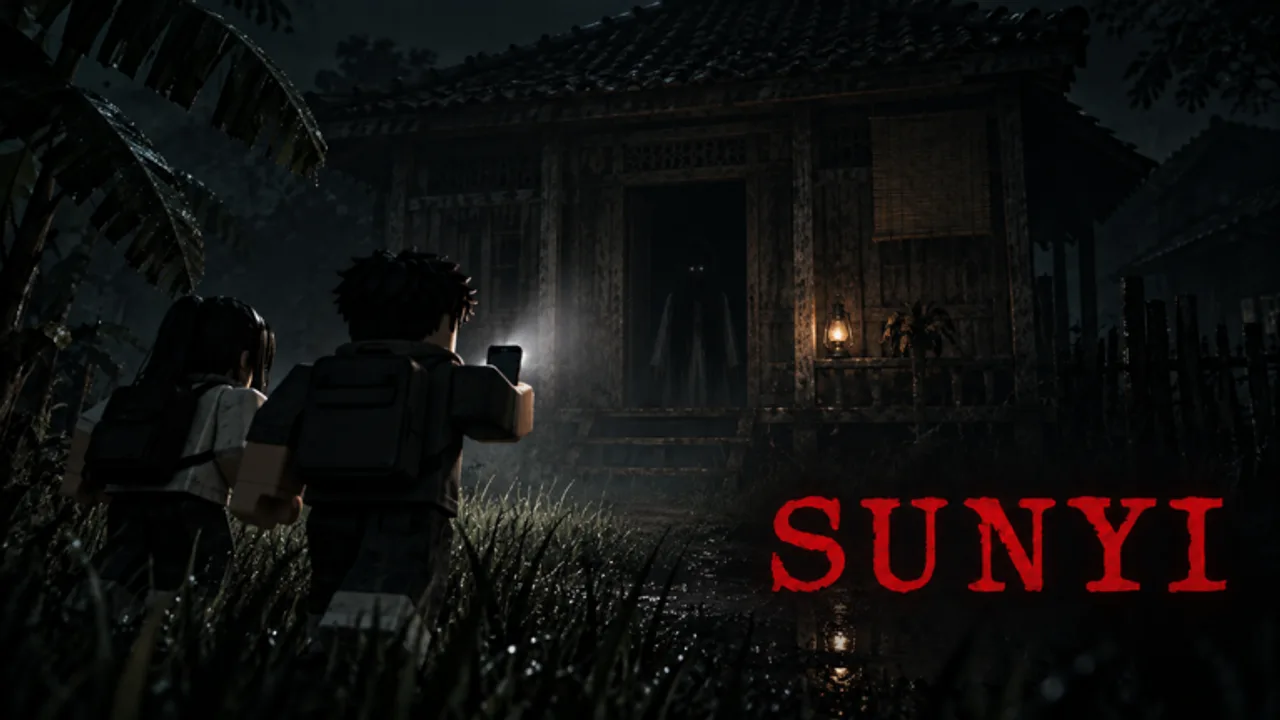
The pocong is one of three named entities you face in SUNYI [HORROR] by Greyfox Studio, alongside Marni and Si Kecil. The game is a Roblox co-op horror session for one to five players set in Karangwaru, Jawa Tengah. Chapter I traps your party in and around Rumah Wirjodihardjo — empty since 2001 after the last ritual was never completed. This page keeps folklore context short, then spends most of its length on practical threat behavior: noise, headphones, drawer discipline, and co-op callouts. For the full threat roster, return to the Players Hub. For altar outcomes after you survive the house, use the endings guide.
Brief folklore context
In Javanese and wider Indonesian tradition, a pocong is associated with the burial shroud. The body is wrapped; the cloth is meant to be untied after burial so the dead can move on. Folklore imagines what happens when that release never comes — a bound figure that hops or lingers instead of resting. Horror media across Indonesia has used that image for decades because it is already uncanny: fabric where a face should be, motion that looks wrong, a death rite interrupted.
SUNYI borrows that cultural weight without turning the wiki into a folklore textbook. In-game, the pocong is a living threat on the same map as Marni and Si Kecil. Knowing the shroud story explains why the design feels specific to a Javanese village haunt instead of a generic ghost mashup. You do not need deeper ethnographic detail to play well — you need to respect the mechanical translation: something unfinished is still moving through the house with you.
In-game threat behavior — noise first
The developer tip printed across the experience is the entire pocong survival thesis in one line: stay quiet — they hear. Loud footsteps, stacked player movement, panicked sprinting, and careless furniture spam are how groups turn a stable room clear into a chase. The pocong thrives on parties that treat SUNYI like a parkour lobby. It punishes parties less when everyone moves like they are guests in a grieving house.
Practical habits that cut risk:
- Enter rooms one or two at a time instead of five avatars crashing a doorway.
- Pause after big sounds — opening a loud drawer, dropping an item interaction, or bumping a prop — and listen before you continue.
- Avoid “fun” screaming on voice chat while someone is mid-search; the game’s audio design and your party’s attention both suffer.
- If you must relocate fast, break the move into short bursts with listen checks between them.
These habits also help against Marni and Si Kecil, but pocong discussions in the community especially stress noise discipline because shrouded pursuit fantasy pairs naturally with “it heard you.”
Audio and headphones
SUNYI recommends headphones for a reason. Spatial cues, distant scrapes, and sudden near-field sounds are early warning systems. Speakers in a noisy room flatten those cues until the threat is already in your face. A dedicated listener role in co-op — one player with clear audio who can say “hold” or “left hall” — is more valuable than a fifth person who only memorizes puzzle steps.
Audio tips that matter mid-run:
- Keep game volume high enough to hear soft layers, not only jump-scare stingers.
- Lower outside music and Discord overlay noise when you enter high-value search rooms.
- Treat unexplained quiet as information: a room that “goes dead” after activity can mean you should freeze, not joke louder.
- Call what you hear in plain words (“steps above,” “cloth sound,” “close left”) so non-listeners can react without asking for a replay.
If you disconnect during a scare, rejoin — progress is kept. Do not abandon a nearly complete altar route because a pocong moment forced a client blip.
Searching while the pocong exists
Your Chapter I objectives still stand: explore, read clues, collect every object the altar requires, then make the choice that selects one of three endings for the whole party. Optional twelve lore fragments track in Berkas Karangwaru toward the Saksi Karangwaru title. The pocong does not pause that checklist; it taxes how loudly you execute it.
Search protocol that respects the threat:
- Clear sightlines and listen before opening clusters of drawers.
- Check corners, dark spots, and backs of furniture — the same places guides tell you items hide.
- Announce “searching” so teammates stop pacing behind you.
- Finish the room before you narrate findings at full volume in the doorway.
- Move loot and information to a calmer regroup point instead of celebrating on top of the last interactable.
Warung Kakek between runs is a good place to reset nerves, buy what you need, and re-brief silence rules before another attempt.
Co-op spotting and sibling threats
The pocong is never the only problem on the map. Marni carries the household lore and the altar name debate (players often say writing Marni can be wrong; landlord and Ki Sumatos names circulate). Si Kecil leans on small-sound suspense and needs active spotting. A healthy five-player brief assigns:
- Listener for audio
- Searcher for drawers and fragments
- Spotter watching flanks while others read
- Altar lead holding requirements and ending intent
Solo players compress those roles and should expect slower clears. Either mode benefits from the printable-style run checklist on the Tools Hub.
Chapter II: Malam Rendra continues the wider Karangwaru story — including Marni’s past and secret-ending talk — on the Chapter 2 page. Pocong pressure in Chapter I remains the training ground for the same quiet habits you will want later.
What to read next
- Players Hub for the full entity overview
- Marni for lore and altar name confusion
- Si Kecil for little-one audio suspense
- Endings for the three altar outcomes
- Getting Started and Guides Hub for objective routing
- Run checklist before your next quiet night in Rumah Wirjodihardjo
Respect the shroud story, then play the mechanic: less noise, more listening, cleaner searches, shared ending intent. That is how parties keep the pocong from owning the run.
Frequently Asked Questions
Quick answers for SUNYI Roblox players.
What is a pocong in SUNYI?
It is one of three Chapter I entities, drawing on Javanese shroud burial folklore. In play it functions as a noise-sensitive threat while you explore Rumah Wirjodihardjo and gather altar requirements.
How do I reduce pocong risk?
Stay quiet, use headphones, avoid stacked sprinting, pause after loud interactions, and clear drawers with a teammate holding watch. The game’s tip — they hear — is the core rule.
Does the pocong change the three endings?
Endings are decided by your altar choice, shared across the party. Surviving entity pressure is how you reach that choice with the required items — see the endings guide for outcome planning.
Should solo players still worry about noise?
Yes. Solo runs remain fully valid, but you must self-cover listening and searching. Headphones and slower room clears matter even more without a dedicated spotter.